
The Cyber Weekend of last year was the biggest one ever in U.S. ecommerce history, with online shopping spend increasing to more than $9.4 billion on Cyber Monday and over $7.4 billion on Black Friday, an increase of almost 20% compared to 2018. However, downtime and cyber-attacks continued to plague ecommerce merchants, more than in 2018, even as they made significant improvements in terms of their website performance infrastructure. We conducted a survey of 450+ ecommerce professionals to analyze how their businesses planned for and fared during the 2019 holiday season, in terms of revenues, growth, page load speeds, downtime, and cybersecurity. The survey also investigated how they felt about their current hosting infrastructure, top challenges, and infrastructure solutions they would like to invest in. We compiled our findings into our 2019 State of Ecommerce Infrastructure report. You can download the complete report here for more insights. For now, please enjoy and share the infographic below:  Feel free to use the infographic on your blog/website with appropriate attribution to Webscale. Copy the code in the text area below:
The State of Ecommerce Infrastructure 2019
The Cyber Weekend of last year was the biggest one ever in U.S. ecommerce history, with online shopping spend increasing to more than $9.4 billion on Cyber Monday and over $7.4 billion on Black Friday, an increase of almost 20% compared to 2018. However, downtime and cyber-attacks continued to plague ecommerce merchants, more than in…

by Andrew Humber | March 12, 2020
Popular posts

by Adrian Luna | February 4, 2026
How to Identify Good vs. Bad Web Traffic

by Ryan McVeigh | January 30, 2026
From Operations to Intelligence: Shaping the Future of...

by Adrian Luna | January 27, 2026
What Are Carding Attacks?

by Adrian Luna | November 4, 2025
How Ecommerce Security is Evolving with Artificial Intelligence
Stay up to date with Webscale by signing up for our blog subscription
Recent Posts
by Adrian Luna | September 29, 2026
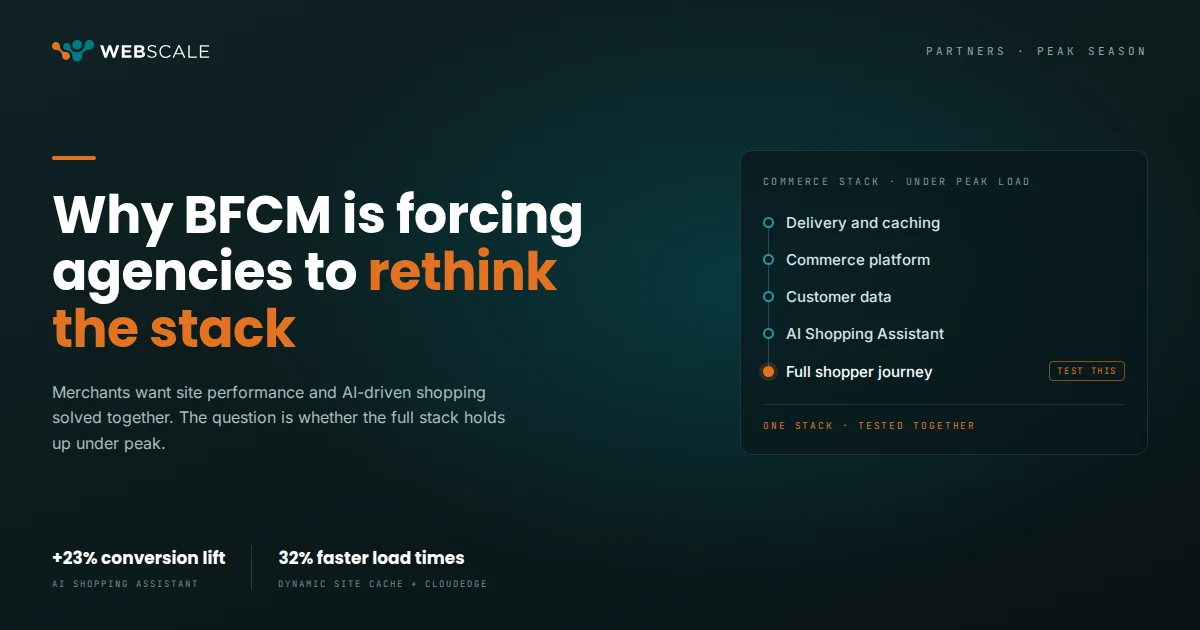
Why BFCM is forcing agencies to rethink...
Merchants are asking agencies to solve site performance and AI-driven shopping at the same time. That changes how agencies evaluate, test and support the commerce stack before peak.
by Adrian Luna | September 21, 2026
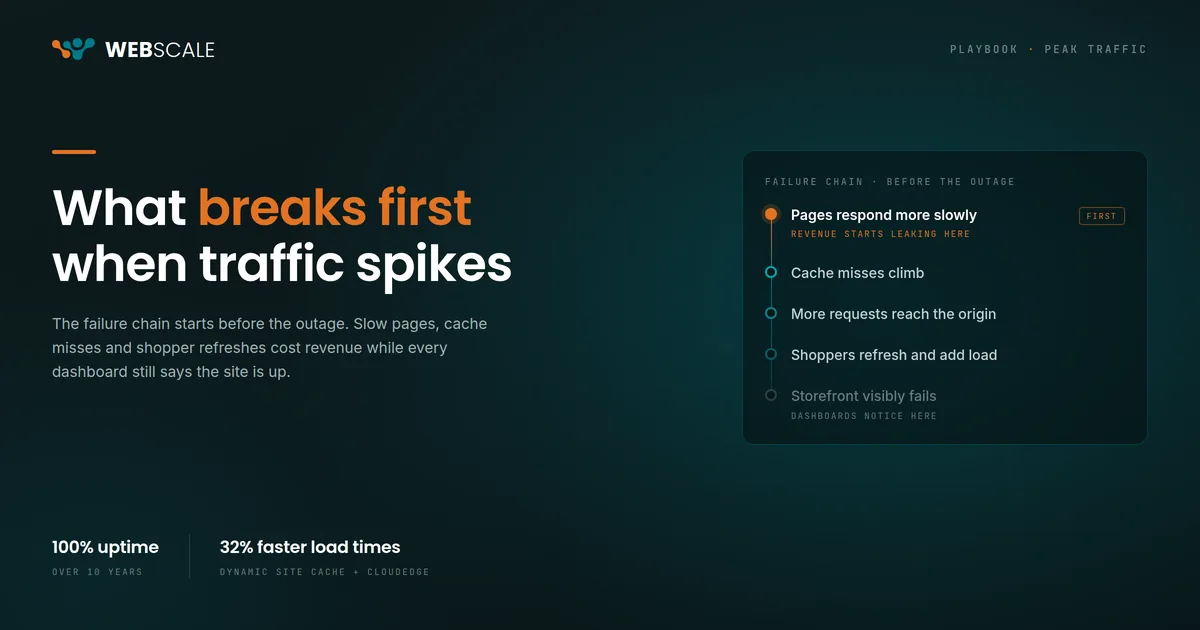
What breaks first when ecommerce traffic spikes
Ecommerce failures during peak traffic start before the outage. Slow pages, cache misses, and shopper refreshes cost revenue while dashboards still say the site is up. Here's the failure chain...
by Adrian Luna | September 15, 2026
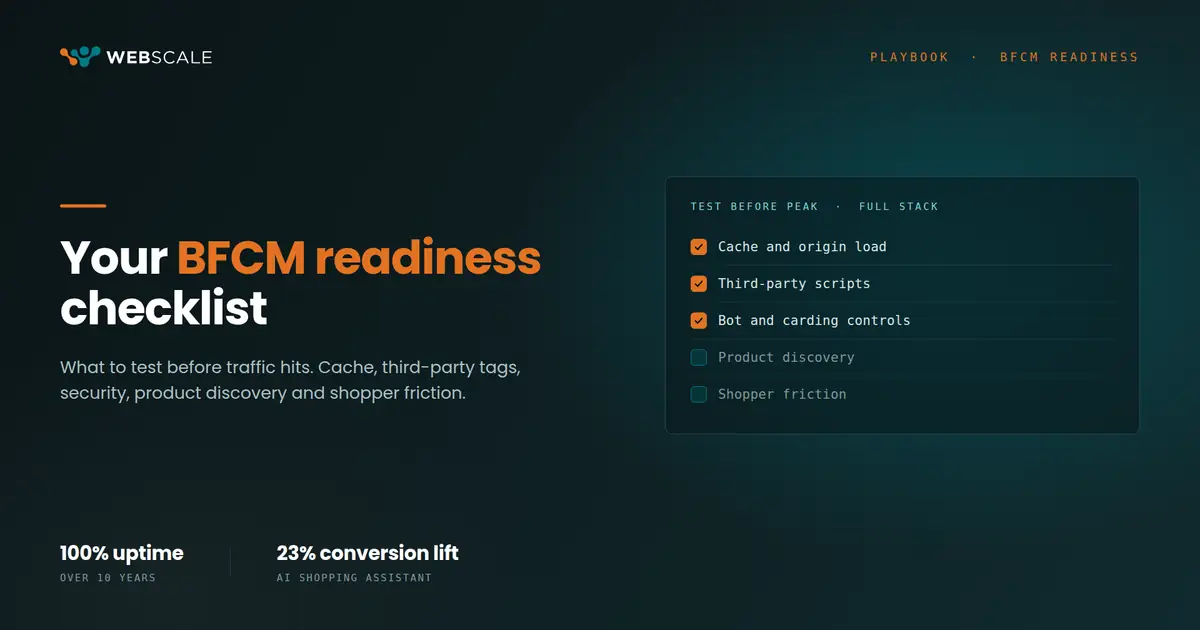
Your 2026 BFCM Readiness Checklist: What to...
Most BFCM checklists skip what actually fails during peak. This one covers cache, third-party tags, security, product discovery and shopper friction.