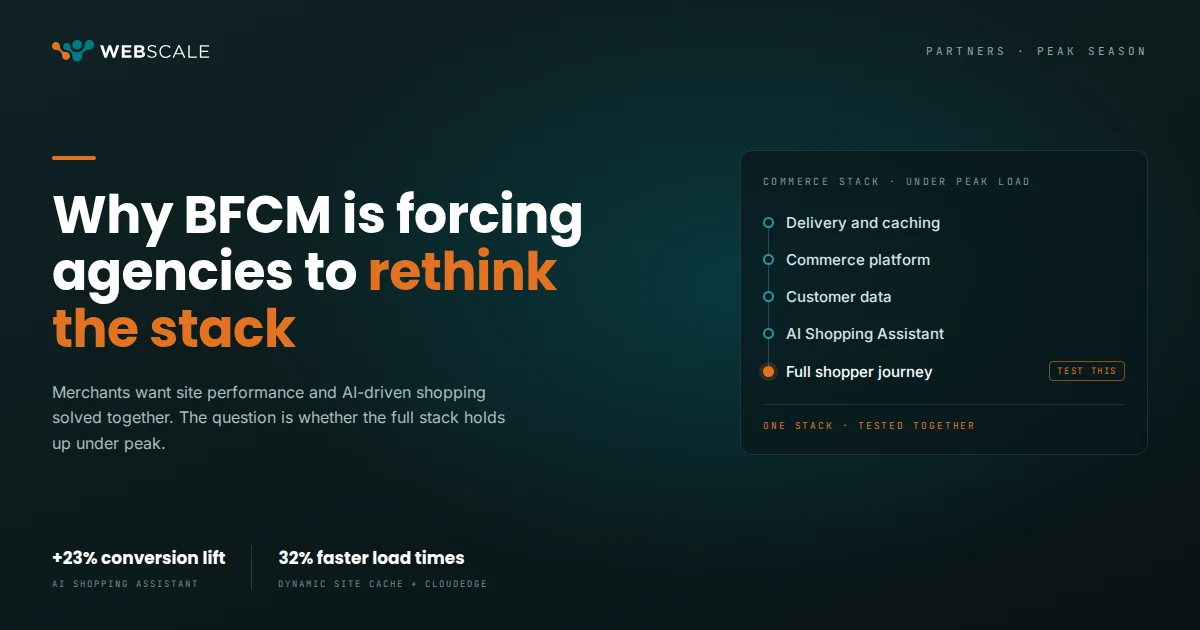
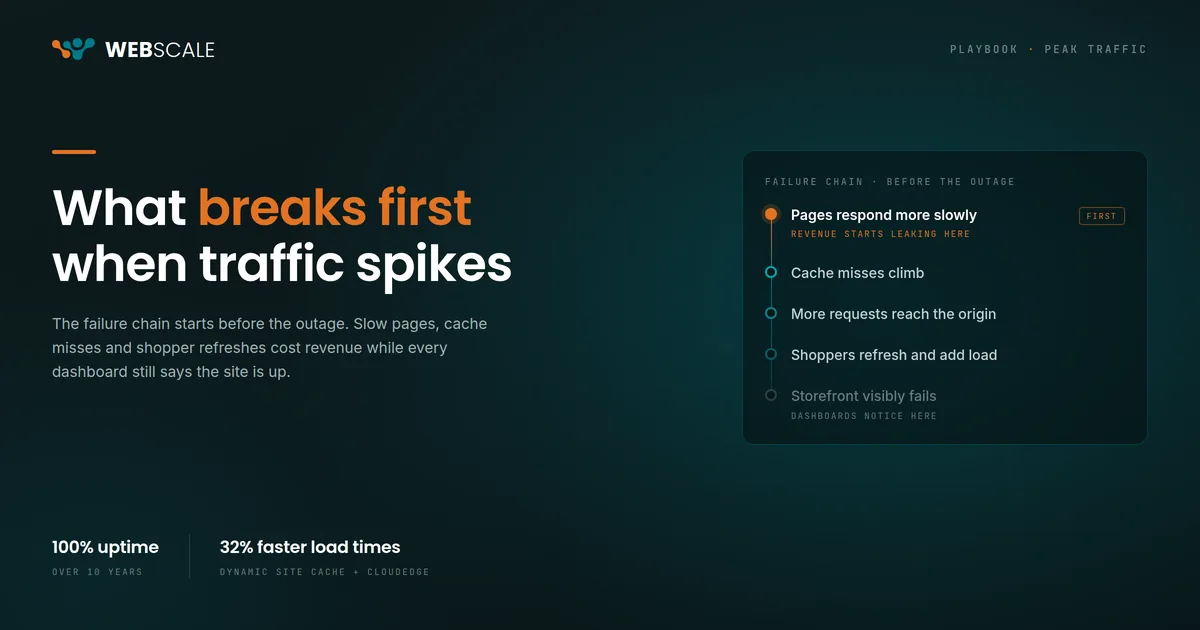
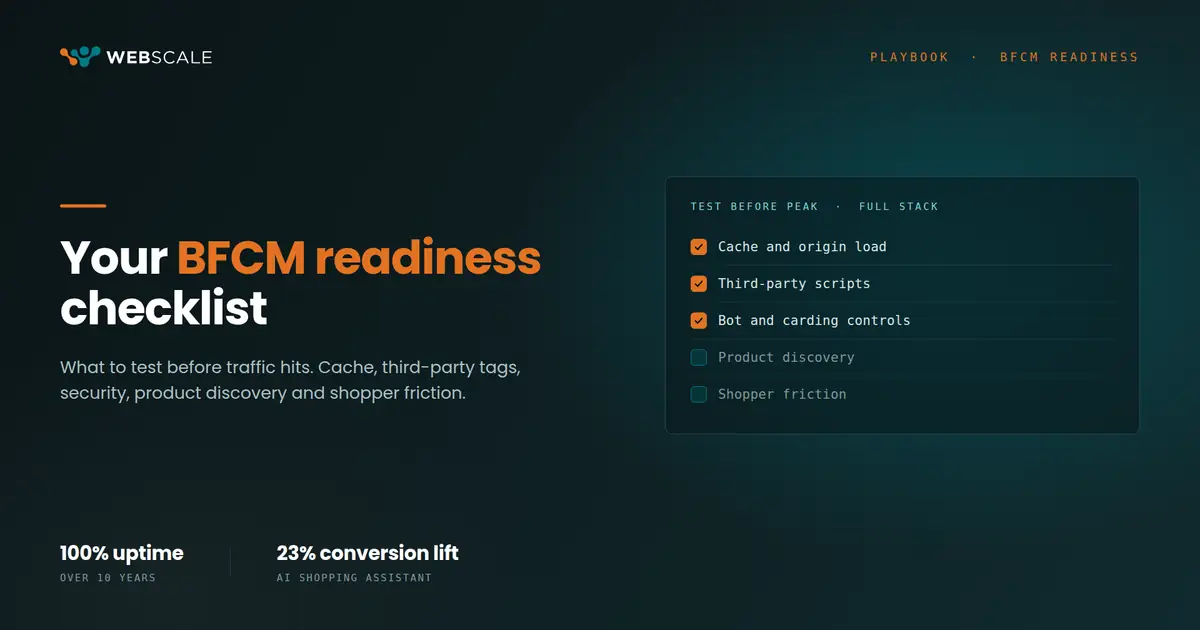
The campaign goes live at 10am. By 10:04 the site is slow and by 10:09 checkout is timing out. By the time the infrastructure catches up, the conversion window has closed.
The architecture decision was made when the infrastructure was chosen.
Why most platforms are always reacting
Most managed hosting solutions respond to traffic through resource-threshold autoscaling. When CPU load climbs past a defined threshold, the platform provisions additional PHP workers. Capacity arrives and the server recovers.
The problem is timing. A CPU threshold fires after the infrastructure is already under stress. For a shopper who hits the storefront in the first two minutes of a surge, the platform is still climbing toward the trigger point. Response times are already degrading. Cart processes are already queuing.
Resource-threshold scaling was built to protect the server. The conversion window closes while it catches up.
What commerce-signal scaling looks like
A platform that scales on commerce behavior reads different signals:
- Session velocity
- Cart additions
- Checkout flow entries
- Page request patterns
The system sees a surge beginning in the request data before the CPU registers it, and pre-allocates capacity ahead of the performance degradation curve.
The distinction matters most at the exact moment a campaign fires. The traffic arriving in the first few minutes carries the highest intent. Those shoppers clicked because something motivated them to act. Losing those conversions to a slow checkout is the most expensive kind of abandonment, because the campaign spend driving them has already been paid.
The uptime question most merchants are asking wrong
“What’s your uptime?” is a common infrastructure question in vendor evaluations. It’s also incomplete.
A site that’s technically available but degrading under load isn’t providing uptime in any meaningful commerce sense. The benchmark that matters is performance at peak load.
Watsco operates eight business units across more than 685,000 SKUs. They have kept every production business unit running through peak load since 2020. That record holds because the infrastructure underneath reads commerce context continuously. The platform was built with that traffic behavior as the baseline.
What behavior-driven scaling changes in practice
When the platform scales on what shoppers are doing instead of what the server is experiencing, the capacity event happens before the degradation. The shopper who arrives in the surge’s first minute encounters a site that was already ready for them.
For a campaign-heavy merchant, this shifts the economics of promotional traffic. The inventory investment, the creative spend and the media cost all assume a conversion rate. An infrastructure that degrades during the peak window is applying a tax to every promotional dollar spent.
The question to ask your current infrastructure
Before the next campaign, one question is worth understanding: what triggers your platform’s scale event, and how many seconds pass between that trigger and the capacity becoming live?
If the answer involves a CPU threshold and a warm-up window, that gap is the exposure window during every campaign surge. The merchants who have closed it built their infrastructure around a different trigger.
See how Webscale handles peak commerce traffic: webscale.com/perform-under-peak-demand/